
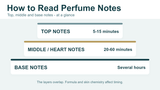
Perfume notes tell you what a fragrance smells like and how it changes on skin. Most fragrance pyramids organize that progression into three layers: top notes make the first impression, middle or heart notes define the scent's main character, and base notes shape the lasting dry-down.
What Are Perfume Notes? Scent Notes and Fragrance Notes Explained
Perfume notes, fragrance notes and scent notes all mean the same thing: the smells a perfumer uses to describe a fragrance. They may refer to a recognizable material, such as bergamot or sandalwood, or an imagined effect, such as amber, marine air or clean linen.
Think of a notes list as a map, not a formula sheet. A single listed note may be built from several materials, while one ingredient may support more than one effect. When a page says "rose," it tells you what the scent is meant to smell like rather than revealing every raw material or exact amount in the formula.
Most fragrances unfold in layers instead of smelling identical from the first spray to the end of the day. Top notes make the introduction, middle notes form the heart and base notes leave the final impression.
How a Fragrance Note Evolves Over Time
Volatility is how quickly a material evaporates. Lighter, more volatile molecules usually reach your nose first, while heavier ones tend to stay around longer, although the full formula affects how fast any note appears and fades.
Top notes are clearest in the first few minutes and often fade within about 5-15 minutes. Middle notes become easier to read as the opening settles, usually over roughly 20-60 minutes. Base notes emerge through the dry-down, often from about an hour onward, and can remain for several hours.
Those layers overlap. They do not switch on and off like three separate tracks. Skin chemistry, body heat, hydration, application and weather can speed up or slow down the whole progression, which is why the same scent can read differently from one person to another.
Reading a Perfume Notes Pyramid
Most product pages use a fragrance pyramid that lists top notes first, middle or heart notes second and base notes last. Read all three, but start your buying decision at the bottom: the base is the part you may still smell hours later.
Next, scan the heart for the fragrance's main theme. A rose, jasmine and ylang ylang heart will usually read differently from a cardamom, lavender and geranium heart even if both open with bergamot. Treat the top as the first impression rather than the whole decision.
Also check whether a product page names an accord or a single note. An accord combines materials to create one effect, so "amber," "marine accord" and "leather" may describe constructed scent ideas rather than one raw material. Brands may also leave supporting materials off a simplified notes list.
Then compare the pyramid with what already works for you. If cedarwood, vetiver and musk work well on your skin, give a woody base more weight than a trendy fruit in the opening.
Reading the Notes in Good Girl
The featured notes in Good Girl Eau de Parfum show how the layers work together:
- Top - Bitter almond creates a warm, distinctive first impression. It tells you the opening will not be a simple burst of fresh citrus.
- Middle - Jasmine sambac and tuberose form a bright, creamy white-floral heart. This is the main character that emerges after the opening settles.
- Base - Roasted tonka bean and cocoa bring sweetness, warmth and darker depth to the dry-down. If those notes are not your style, the floral opening alone should not make the decision.
Start at the base: tonka bean and cocoa tell you the dry-down will be warm and sweet. Jasmine sambac and tuberose shape the floral center, while bitter almond adds contrast at the opening. The full scent is much more than the first few minutes.

Top Notes
Top notes create the first impression. They are the bright, quick materials you notice immediately after spraying, before the fragrance has settled into its main shape.
Bergamot, lemon and orange are common citrus top notes. Lavender and basil can add a lighter aromatic or herbal lift. Apple, berries and other fruits also appear frequently in openings because they give the scent an easy-to-recognize hook.
Smell the top notes right away, but do not buy from the opening alone. A sharp citrus blast or sweet fruit effect can fade within minutes, revealing a heart and base with a different mood. Give the fragrance at least an hour on skin before you decide whether the whole composition works.
Middle Notes (Heart Notes)
Middle notes are the body of the fragrance. They become clearer after the most volatile opening materials fade and usually carry the theme that connects the top to the base.
Jasmine, rose, geranium and ylang ylang are classic heart notes. Aromatic, fruity and spicy materials can show up here too. A note's position depends on the formula, so the same material may appear in a different layer elsewhere.
Wait roughly 20-60 minutes before judging the heart. This is often the stage that tells you whether a fragrance feels fresh, floral, spicy, creamy or clean in actual wear.
Middle Notes Example: Ylang Ylang
Ylang ylang is a sweet, creamy floral with a lush, slightly fruity character. It can soften a sharp citrus opening, add body to jasmine or other white flowers and make a floral heart feel smoother.
If you enjoy ylang ylang but want to keep the fragrance easy to wear, look for it with citrus, soft florals or clean woods. In richer formulas, vanilla, amber or spice can make the heart feel warmer and fuller.
Base Notes: The Foundation of a Fragrance
Base notes are the slowest part of the fragrance and the foundation of the dry-down. They emerge as the brighter materials fade, support the rest of the composition and often remain for several hours. Common examples include vanilla, amber accords, musk, patchouli, sandalwood and cedarwood.
Some base materials act as fixatives, slowing evaporation and helping the composition hold together. A listed base note alone cannot guarantee long wear. Performance still depends on concentration, dosage and the complete formula.
When you are shopping online, give the base extra weight. If you love an opening built around grapefruit but dislike patchouli and vanilla, the first ten minutes may win you over and the next five hours may not. The notes that last deserve more weight than the opening alone.
Base Notes Example: Tonka Bean
Tonka bean usually smells warm and sweet, with vanilla, almond-like, hay and soft tobacco facets. It can round off sharp woods, deepen vanilla and give amber or gourmand fragrances a smooth finish.
Look for tonka with sandalwood, cedarwood or vanilla when you want a warm base. In an aromatic fragrance, tonka can also soften lavender or herbs without turning the whole scent into dessert.
Fragrance Note Families
Note families make a large fragrance selection easier to navigate. Start with the overall character you want, then read the pyramid to see how a specific fragrance builds that style.
Match the family to the setting. Fresh, aquatic and citrus profiles often feel comfortable in daytime or heat. Woods, amber accords and spice can add depth for evenings or cooler weather. Floral and musky scents can move across seasons depending on their weight.
For a full look at each scent family and how they connect, see our guide to the fragrance wheel.
Fruity Notes
Fruity notes create juicy, bright or sweet effects. Apple often appears near the top, where its crisp character makes an immediate impression. Berries, pear, peach, plum and tropical fruits can range from tart and sheer to syrupy.
Check what surrounds the fruit. Citrus and green notes usually keep it brighter, while vanilla, caramel or dense amber can push it sweeter. Sample on skin if sweetness level is a deal-breaker.
Woody Notes
Woody notes give a fragrance structure and dry-down depth. Cedarwood can smell dry, pencil-like or clean. Sandalwood is often creamier, while vetiver may read earthy, smoky, grassy or fresh depending on the material and blend.
Woods are useful when you want a fragrance that feels grounded after a bright opening. Many woody and aquatic scents are worn by everyone, so explore unisex fragrances too.
Aquatic Notes
Aquatic notes create a fresh, clean impression associated with water, sea air or cool skin. A marine accord is a constructed effect rather than water taken from the ocean. It may combine airy, salty, mineral or ozonic materials.
Aquatic fragrances are easy daytime choices and often perform well in warm weather. Read the base before assuming they will all feel light. Woods, musk or amber can give an aquatic opening more weight.
Floral, spicy and musky are also common families. Most fragrances mix several families, so use these labels as a map, not a set of locked boxes.
Cologne Notes: Are They Different from Perfume Notes?
No. Cologne notes are read exactly like perfume notes, with the same top, middle and base structure. The word "cologne" may describe the lighter eau de cologne concentration, but in everyday US usage it often means any fragrance marketed to men.
Many popular colognes lean toward citrus, aromatic, spicy and woody notes, but none of those families belongs to one gender. Read the pyramid and wear what fits. Browse men’s fragrances to find colognes built around your favorite notes.
How To Test and Choose Perfume Notes
Test fragrances on skin, not just on a paper strip. Your body heat, hydration and skin chemistry affect the dry-down, so paper cannot give you the full answer.
Sample one scent at a time when you are learning its structure. If you test more than one, keep them on separate wrists and write down the time. Check the opening, return at 20-60 minutes for the heart and check again after several hours for the base.
Wear a sample on an ordinary day. A fragrance that impresses for five minutes at a counter still has to work at your desk, in the car and around other people. Travel sprays and vials give you enough product to test the scent in different weather and at different application levels before committing to a full bottle.
Tester and no-box bottles share the same formulation - and therefore the same notes - as boxed retail bottles. What changes is the presentation. Our FAQ about unboxed fragrances explains what to expect before you order.
Quick Reference: Common Notes By Type
Use this table as a starting point, not a rigid rule.
Note: The same note can sit in a different layer in different fragrances.
Glossary: Fragrance Note Terms
Accord: A blend of materials designed to create one recognizable smell or idea, such as amber, leather or marine air.
Dry-down: The later stage of wear after the opening has faded and the heart and base are most noticeable.
Fixative: A material used to slow evaporation or help other parts of the fragrance last and blend smoothly.
Note pyramid: A top, middle and base arrangement used to explain how a fragrance develops over time.
Sillage: The scent trail a fragrance leaves behind as the wearer moves.
Volatility: How readily a material evaporates. More volatile materials tend to become noticeable and fade earlier.
Final Thoughts: Find the Notes You Love
Top notes make the introduction, middle notes carry the main character and base notes shape the lasting dry-down. Read the base first, then use the heart and top to decide whether the full progression suits your taste.
Once you can read perfume notes, shopping online becomes less of a blind buy. Shop women’s fragrances by the notes you like, or build a short list from our men’s fragrances and unisex fragrances. Then use a vial or travel size to confirm the fragrance works on your skin before committing to the full bottle.
Frequently Asked Questions